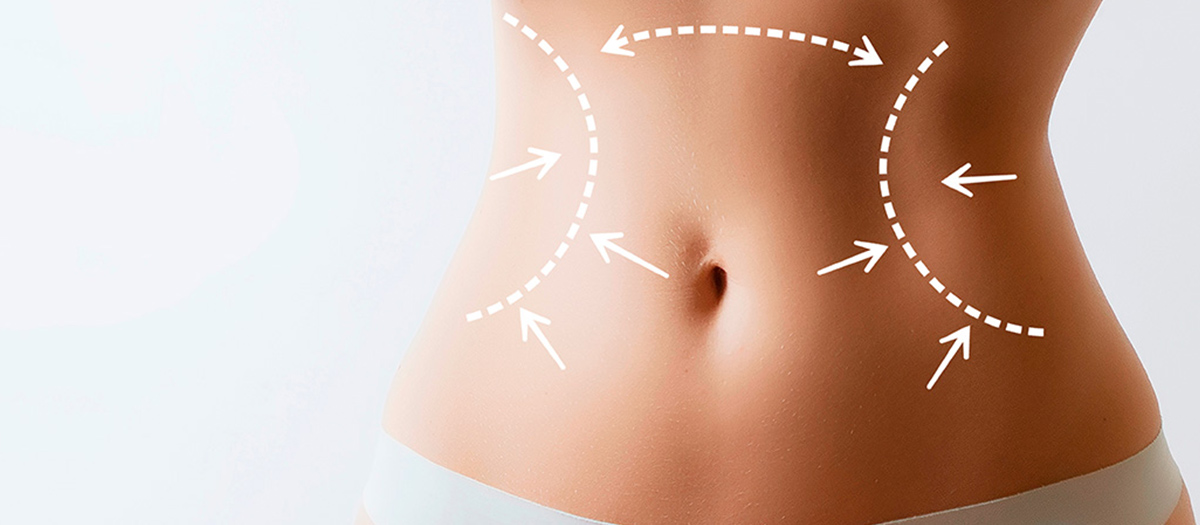
A taut stomach and a thin waist are one of the important signs of youth. However, the abdominal region is one of the fastest deteriorating areas, especially in women, after births and with weight gain and loss. Childbirth loosens the skin of the abdomen, cracks, leads to abdominal muscles and bulging of the abdomen. Fattening occurs most often around the belly and waist, especially after menopause. Tummy tuck can be applied to solve such problems in the abdominal region. In the tummy tuck procedure, the excess fat in the entire abdomen and waist area is removed, the excess skin under the belly is removed and the loosened abdominal muscles are repaired.
Full tummy tuck is often applied to people who have given birth or have gained and lost excess weight. If the patient has excess skin above the belly button and there is a layer under the belly button that he can hold with his hand while sitting, it is a suitable candidate for full tummy tuck. If the excess skin and fat is collected only under the belly, mini tummy tuck is performed.
In the full tummy tuck procedure, liposuction is first applied to the entire abdomen and waist area. Then, a long incision is made on the underside of the abdomen so that it remains in the laundry. The skin of the abdomen is lifted from the abdominal wall up to the ribs. The belly button is separated from the skin. The abdominal muscles, which are relaxed, are sutured together, tightening the abdominal wall. Then, the entire skin under the belly button is removed. The skin remaining on top is pulled down and a new slot opens for the belly button. After a full tummy tuck and the top and bottom of the belly button are stretched, the waist is thinner, the abdominal wall is stretched, and the belly button takes on a vertical and youthful appearance.
In patients with excess skin only under the navel, without accumulation on the navel or very little, mini tummy tuck is performed. In this surgery, a common liposuction is performed first. An incision is made on the underside of the abdomen, so that it remains in the laundry, but shorter. The skin under the belly is removed and the excess is removed. If there is also some excess on the navel, the belly button is shifted down by 1–2 cm.
If necessary, the abdominal wall muscles can also be repaired. Being overweight poses a risk to all surgeries. After surgery, these patients have more difficulty standing, their wounds heal later, and lung problems are more frequent. For this reason, obese patients are advised to reduce their weight before surgery. However, if patients cannot move and lose weight sufficiently due to the weight of their bellies, tummy tuck can be planned just to reduce their load.
Tummy tuck surgeries are performed in the operating room environment and under general anesthesia. During the operation, patients are dressed in anti-embolism socks, a urinary catheter is inserted and a drain is placed. After the operation, the abdominal corset is worn. The patient is fed and restored to his feet three to four hours after surgery. In the first days, they need to walk leaning forward so as not to put a load on the seams in the abdomen. After four or five days, they can stand upright.
This period is even shorter for mini tummy tuck patients. The next morning the probe is removed and the patient is discharged. If necessary, drains are left in place for a few more days. They may lie on their side the night after surgery. A shower can be taken 24 hours after the drains are removed. There is no need to remove stitches since all stitches are left under the skin. One week after surgery, patients can return to their daily lives. After three weeks, sports can be started except for abdominal movements. After six weeks, all sports activities are free.
The most feared complication during surgery is pulmonary embolism. This risk is higher in elderly people, obese and diabetic patients and in heavy smokers. Patients with excess weight are recommended to lose weight before surgery. Another problem is skin losses and the fact that wounds do not heal. Preoperative planning errors, excessive skin removal, poor control of bleeding and smoking increase such problems.
Problems such as serum accumulation under the skin may also be encountered a few weeks after surgery. In such a case, it may be necessary to drain the serum with the help of an injector. Problems such as excessive scarring on the abdomen and some skin types that are closed very tense may occur. If this situation is due to tension, a revision procedure can be performed under local anesthesia to thin the scar after one year. Tummy tuck surgery brings a radical solution to the problems in the abdominal area and the results can be said to be permanent. In case of excessive weight gain and loss and conception again after surgery, the results may suffer some loss, but never return to the way it was before.
After tummy tuck surgeries, patients should pay attention to their weight and eat a balanced diet. It will be good for them to reduce their alcohol consumption to reduce intra-abdominal fattening. They need to regularly use body lotions and moisturizer so that the tight skin does not crack again. Regular exercise allows the abdominal muscles to strengthen again and ensure that the appearance of the strained abdomen obtained by surgery is maintained.
It is possible to become pregnant after a tummy tuck, but pregnancy leads to a re-relaxation of the abdominal wall and an abundance of the skin. For this reason, this surgery is not recommended for patients who plan pregnancy in a short time. However, surgery does not constitute an obstacle to conception.
- Plastic Surgery
- Mommy Makeover
- Non-Surgical Facial Rejuvenation
- Leg Lift Surgery
- Bichectomy
- Lower Face Rejuvenation
- Rhinoplasty
- Jaw Tip Aesthetics
- Genital Aesthetics
- Blepharoplasty (Eyelid Surgery)
- Inward Nipple Operation
- Gynecomastia
- Hip Butt Aesthetics
- Abdominoplasty (Tummy Lift)
- Eye Brow Lift
- Otoplasty (Ear Aesthetics)
- Arm Stretching
- Liposuction
- Breast Augmentation Operation
- Breast Lifting Operation
- Reduction Mammaplasty
- Operations After Bariatric Surgery
- Mid Face Lift
- Fat Injections to the Face
- Non-Surgical Aesthetics
- Plastic surgery